Research Area 01

Self-Assembly of Soft Matter
Block Copolymer Self-Assembly

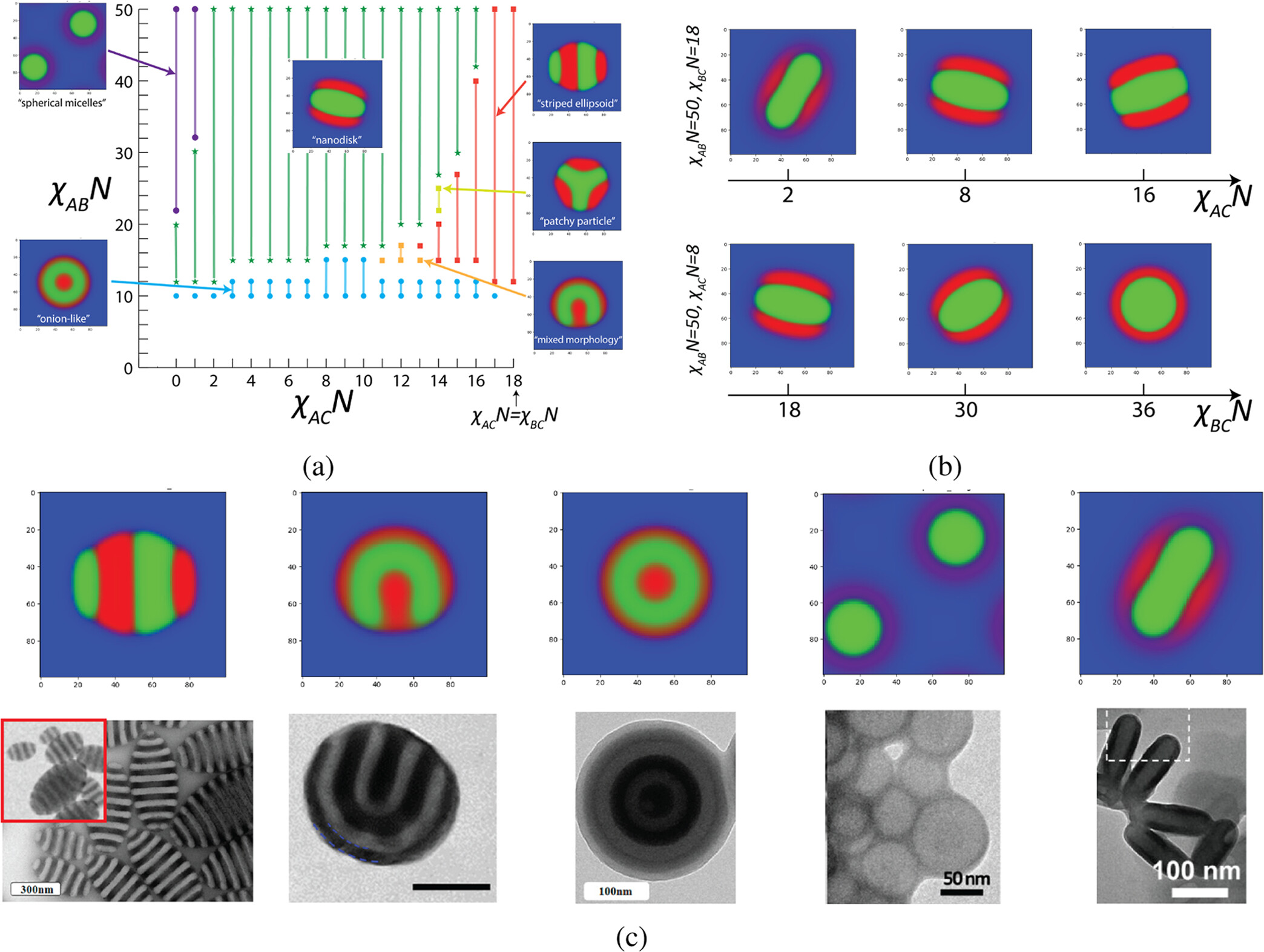
Self-assembly is a process where molecules and nanoparticles self-organize into an ordered system due to local interaction. It provides an efficient and cost-effective way to fabricate complex nanostructures with long range order.

In our work, we utilize simulation tools such as dissipative particle dynamics (DPD) and self-consistent field theoretic simulations (SCFT) to study the enthalpic and entropic effects in self-assembled structures. In combination with experiment, it enables us to design novel 3D self-assembled nanostructures with approximately 10nm feature sizes.


Research Area 02

Bio-Inspired Soft Matter

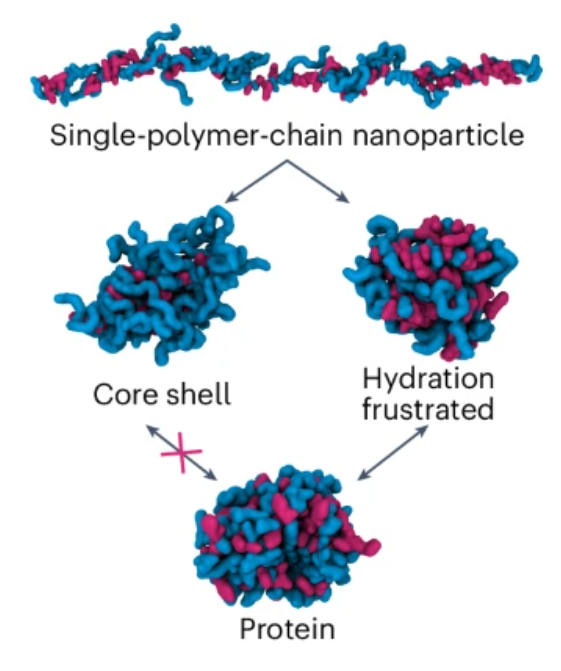
Various bio-materials with distinct molecular designs and complex functions are found in nature. We simulate these biological systems and systems inspired by them using tools, such as molecular dynamics (MD), to understand their behavior.

The information we gain from these simulations enable us to design new bio-inspired materials, inform experiments, and understand the fundamentals at play in natural systems.

Bio-Inspired Soft Matter

Research Area 03

Machine Learning for Soft Matter

Machine Learning for Soft Matter

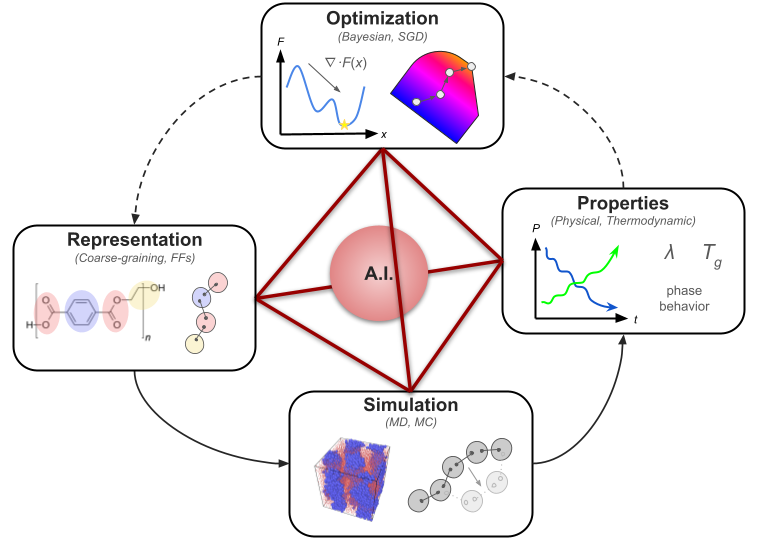
Machine learning and artificial intelligence are transforming polymer science, providing powerful tools to predict material properties, accelerate simulations, and design novel polymers. Despite significant advances in training models on experimental data and developing surrogate models for simulations, major challenges remain in generalizing across the immense diversity of polymer chemistries, architectures, and processing conditions.

Our research explores the intersection of AI/ML and polymer simulations, focusing on data-driven property prediction, advanced featurization strategies, and hybrid simulation-machine learning frameworks. We address critical challenges including data scarcity, the difficulty of assessing simulation equilibration, limitations in phase identification, and the largely unexplored connections between synthetic polymers and protein systems.

Interested in Our Work?

Explore our publications for detailed findings or get in touch to discuss collaboration opportunities.